Share this post
When the Caregiver Needs Care: Carlos Miranda’s Story
Carlos Miranda has spent his career telling caregivers the same thing: you matter too.
Health and Wellness
Carlos Miranda has spent his career telling caregivers the same thing: you matter too. As CASL’s Caregiver Support Services case manager, his job is to help people who are caring for aging or ill family members understand that taking care of themselves isn’t optional — it’s part of the job.
“My main goal is to really help caregivers understand that they are more than just a friend, a family member,” Miranda said. “If they don’t take care of themselves, their health will deteriorate — and then the person they’re worried about may have to be sent to a different type of care setting, like a long-term facility or a nursing home.”
Many people underestimate what caregiving actually involves, Miranda said. It’s not just hands-on homemaking — it can be as simple as a daily check-in call.
“That’s as simple as it takes to be enrolled in our program for caregivers,” he said. “It’s just so that they cannot be so stressed, so that they can remain healthy and continue caring for that person.”
A caregiver before he had the title
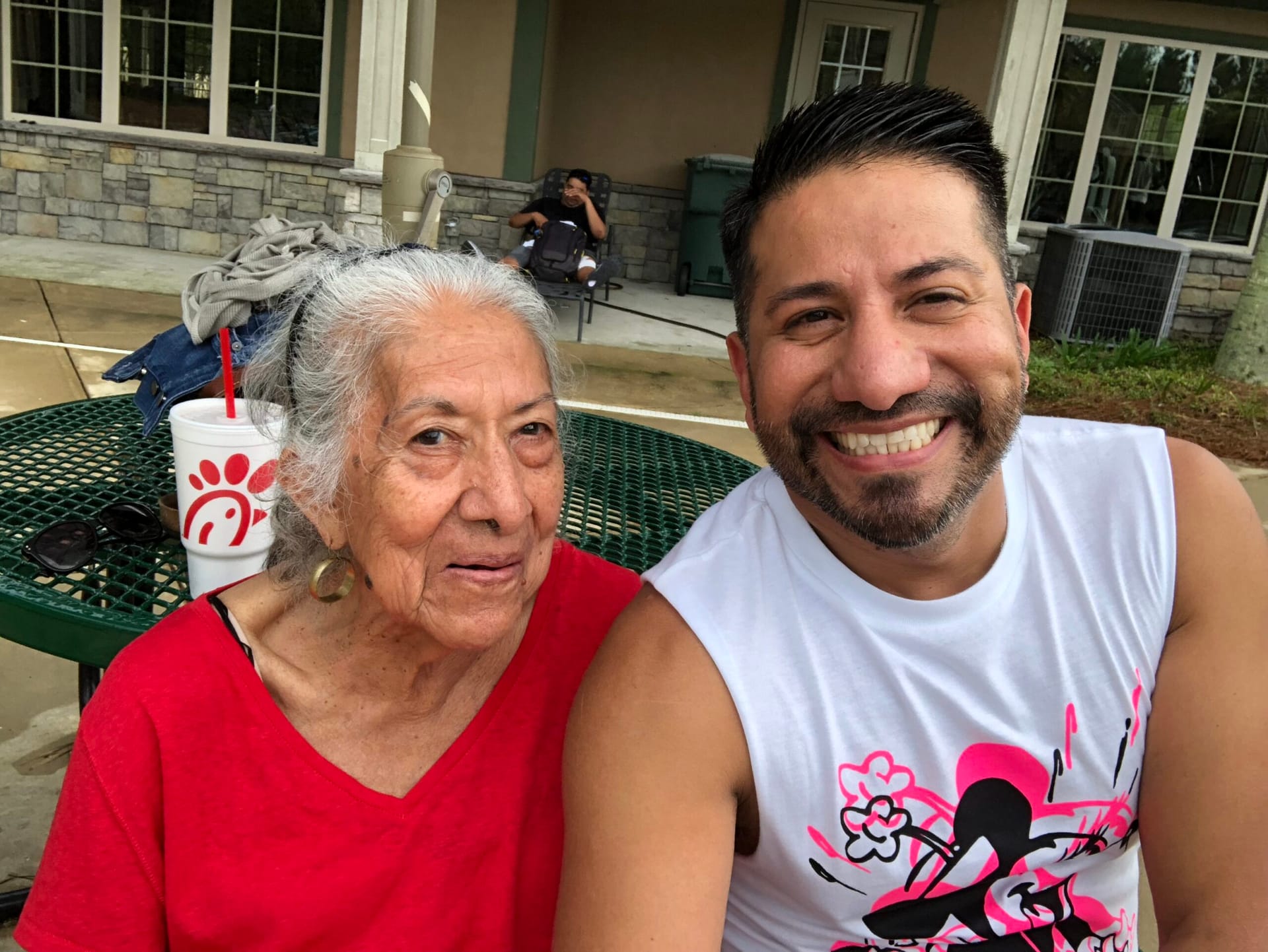
Miranda’s understanding of caregiving didn’t start in a professional role. It started with his mother.
 In the early 2000s, Miranda’s mother had an aneurysm, leaving her with vascular dementia. For a while, Miranda cared for her periodically — his father was still alive, and able to help. But when his father passed away in 2004, the family had to make new arrangements. His mother had started wandering, leaving the stove on, and giving away money.
Eventually, she moved in with Miranda.
His partner at the time agreed to help, on the condition that Miranda’s sister and niece would take over caregiving every other weekend, giving him and his partner two weekends a month to themselves. In the beginning, it worked.
“Little by little, that kind of started to disappear,” Miranda said.
His partner, who didn’t speak Spanish, found ways to communicate with Miranda’s mother, who didn’t speak English. Miranda recalled overhearing him ask, in broken Spanish, if she needed the TV volume turned up.
“That’s when I realized how kind and how lucky I was to have him,” Miranda said.
But as the agreed-upon support from his sister and niece faded, the strain mounted. Miranda’s relationship with his partner ultimately ended, a breakup he attributes partly to the pressure of caregiving without the backup they’d been promised.
“At that point, I realized I couldn’t care for my mom because he was really my main support,” Miranda said.
 His mother moved in with his older brother. She was safe, Miranda said, even if she wasn’t as content as she’d been before, when there had been time for things like getting her hair and nails done, or going shopping together.
“That really hurt, because I really wanted to continue caring for her in that fashion,” he said. “But I didn’t have that support system from the people that said they would support me.”
Miranda shifted from hands-on caregiving to providing financial support instead.
The part nobody talks about
Miranda says the hardest part of caregiving isn’t any single crisis; it’s that circumstances keep shifting, no matter how solid the plan seemed at first.
“You’re going to set up this almost perfect system, but things change. Health changes, relationships change, feelings change,” he said. “That’s just one thing that we should always be prepared for, because life is changing. We evolve, we grow, we change. It’s just about adapting.”
That experience shapes how Miranda talks to the caregivers he works with now. He sees the same pattern repeatedly: family and friends rally at first, then gradually pull back, leaving the primary caregiver to manage everything alone — their job, their own kids, their household, and the person they’re caring for.
“When you’re caring for yourself, you’ll put your needs behind for a little bit, but then you address them,” he said. “But when you’re in the setting of a caregiver, you just keep going back and back.”
Miranda points to actor Gene Hackman and his wife, Betsy Arakawa, as an example of what’s at stake when caregivers neglect their own health. Arakawa, who was caring for Hackman through his Alzheimer’s and dementia, died of an illness she didn’t seek treatment for. Hackman, alone and unaware, died days later.
“Those are the challenges that people don’t talk about,” Miranda said. “If you don’t have that support, you can’t take care of yourself, and you’re going to get sick.”
What caregivers can do for themselves
Miranda’s advice starts with reframing what “selfish” means.
“We talk about selfish being such a bad thing, but I think there are moments in life where we require us to be selfish, because if not, we don’t go forward,” he said.
Practically, that can mean using respite care — even just to take a two-hour bath or sit outside for a while.
“If I would have known back then about respite services, that could have been a great resource for me,” Miranda said. “You don’t even have to leave your home. You just have that person watch over your loved one, make sure that they’re safe. That’s all you need, just those little moments of you.”
Support groups matter too, Miranda said, because isolation is one of the most damaging parts of caregiving.
“Once you get those going and people start sharing, all of a sudden it just takes off,” he said. “These individuals that have been isolated all of a sudden have the community.”
And asking for help, including from outside the family, isn’t a failure.
“It’s not going to come from family most of the time,” Miranda said. “There’ll be those few lucky ones that will have that. But most of the time, it’s going to come from the services that are there in place to help us.”
CASL's caregiver support resources
CASL’s Caregiver Support Services program, offered in partnership with the City of Chicago, provides licensed behavioral health services in the West Region to help caregivers manage stress while caring for older adults or family members with Alzheimer’s or dementia. Resources include:
- Respite and homemaker services, giving caregivers temporary relief and time to themselves
- Counseling, including therapy and case management for people with dementia and their caregivers
- The Stress-Busting Program®, designed specifically to help dementia caregivers reduce and manage stress
- Occupational therapy through Skills2Care®, which supports caregiver well-being while helping people with dementia maintain independence
- Memory Café, a community space for connection and activities for people with memory challenges and their caregivers
- The GUIDE Model, a CMS initiative connecting Medicare Part B beneficiaries with a dementia diagnosis — and their unpaid caregivers — to coordinated medical care, caregiver support, and community resources
Learn more or get connected with a caregiver case manager at https://casl.org/health/caregiver.
Miranda says his ultimate goal is building something caregivers rarely have: a visible community of their own.
“It’s like a silent community, right? We have all these different communities, but you never hear a community of caregivers,” he said.
“They are important, they’re unpaid, and there’s no one there representing them. They need to come to the front of the line, to the spotlight. They need to shine, because they hold these people together. And it’s not an easy journey.”